Bleach, bug spray, hydrocarbons, bug bites and stings could send you to the emergency room this summer

The Idaho Poison Center is getting ready for summer, which is the busiest time of year for the hotline. Bleach (especially if it’s been rainy, and mold and mildew is growing), bug bites and stings, insect repellent, hydrocarbons and food safety are some of the most common topics for calls the center receives at this time of year.
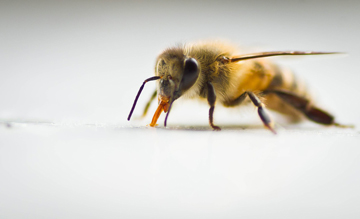
Stings and bites from insects could mean a call to the Idaho Poison Center.

Nurses at the Idaho Poison Center are available to help 24 hours a day, seven days a week. Program the center’s number, 1-800-222-1222, into your cellphone so you have it handy no matter where you are. Continue reading “Bleach, bug spray, hydrocarbons, bug bites and stings could send you to the emergency room this summer”

‘Get Healthy Idaho’ assessment identifies top health priorities for Idaho

The Division of Public Health has released findings from a new comprehensive health assessment that identifies access to healthcare as the No. 1 issue for Idahoans. Other health priorities identified in the assessment won’t come as a surprise, and they include obesity, heart disease and stroke, vaccine-preventable diseases, exercise and suicide.

The assessment, titled “Get Healthy Idaho: Measuring and Improving Population Health,” consists of two parts. The first is the assessment itself. The second part is a five-year plan to improve the health of Idahoans based on the findings in the assessment. The assessment and health improvement plan are part of an in-depth effort across the division in pursuit of accreditation by the Public Health Accreditation Board (PHAB).   Continue reading “‘Get Healthy Idaho’ assessment identifies top health priorities for Idaho”

Leaves of three let them be: Do you know what poison ivy looks like?

As the seasons change, so do the types of calls coming into Idaho’s Poison Center. With the beginning of summer come the calls about poison plants.

You can recognize poison ivy by the grouping of three leaves from a single  stock.
You can recognize poison ivy by the grouping of three leaves from a single stock. (Photo courtesy of Centers for Disease Control and Prevention.)

Poison ivy, poison oak, and poison sumac can release an oily substance called urushiol when the leaves or other parts of the plant are damaged or burned. While people are most familiar with poison ivy, all three of these plants can be found throughout Idaho. Almost 85 percent of people exposed to even a very small amount of the oil will have an allergic reaction that causes an itchy, red rash with bumps and blisters. Continue reading “Leaves of three let them be: Do you know what poison ivy looks like?”

Dog in Ada County likely has plague but is recovering after prompt treatment

Nearly two weeks after the confirmation of plague in ground squirrels south of Boise, preliminary tests indicate an Ada County dog likely has the disease. A confirmatory test is in progress and final results are expected in approximately one week.

The dog, which had contact with ground squirrels within the area of impact (see map), south of Boise to the Snake River, and from Kuna to Mountain Home, became ill at the end of May. The owner took the dog to a veterinarian where a sample was taken and submitted to the State Public Health Laboratory for testing. The dog has since been treated and is recovering. Those who handled the dog while it was ill are being monitored and provided preventive medication if needed.  Continue reading “Dog in Ada County likely has plague but is recovering after prompt treatment”

FAQ: Plague concerns still high as children start summer break this week

Plague in ground squirrel populations in the desert south of Boise continues to be a concern as schools in the Treasure Valley begin summer vacation this week. Public health officials are reminding people to be aware and to take precautions if they live in or are recreating in the affected area.

So far, there are no confirmed cases of the plague in people or pets. And we’d like to keep it that away for as long as possible. As Idahoans prepare for the first weekend that kids are out of school, please take a few moments to read up on the disease and review what you need to do to protect your family, yourself, and your pets.  Continue reading “FAQ: Plague concerns still high as children start summer break this week”

Recently back from Uganda, DHW employee Aimee Shipman discusses her work on HIV

The level of expertise and knowledge among Health and Welfare staff is extremely high, and a blog post for the National Alliance of State & Territorial AIDS Directors (NASTAD) takes notice of that expertise in one DHW program manager.

Aimee Shipman, her son, Nathan, and their dog, Ancho, take a break from a hike in Castle Rock Reserve in Boise's east end.
Aimee Shipman, her son, Nathan, and their dog, Ancho, take a break from a hike in Castle Rock Reserve in Boise’s east end.

The post highlights Aimee Shipman and her work on HIV for NASTAD, and how that influences her work in Idaho as the program manager for the department’s HIV, STD and Hepatitis programs. She also serves on NASTAD’s executive committee and is currently its secretary.  Continue reading “Recently back from Uganda, DHW employee Aimee Shipman discusses her work on HIV”

It’s Hepatitis Awareness Month in Idaho. How high is your risk for hepatitis?

Idaho Gov. C. L. “Butch” Otter has proclaimed May to be National Hepatitis Awareness Month in Idaho. Hepatitis C is the leading cause of liver cancer and the No. 1 cause of liver transplants in the country. The proclamation helps shed light on the more than 3 million Americans living with Hepatitis C infection, according to the Centers for Disease Control and Prevention (CDC), and the fact that the majority of those people don’t know they are infected. It’s important for everyone to learn about the dangers of Hepatitis C and the importance of being tested if you have a higher risk of being infected.  Continue reading “It’s Hepatitis Awareness Month in Idaho. How high is your risk for hepatitis?”

Idaho Public Health schedules meetings statewide for cottage food and food code updates

The Idaho Department of Health and Welfare’s Food Protection Program is hosting a series of public meetings throughout Idaho in April and May to discuss two important issues: cottage foods and proposed Idaho Food Code updates.

Cottage foods are foods that are typically produced in a person’s home and sold or given away directly to other people. The production of these foods is currently unregulated. The public meetings will help clarify the types of foods that are allowed to be unregulated. Community members also will have the opportunity to discuss whether the state Food Protection Program should promulgate rules specific to cottage food production.  Continue reading “Idaho Public Health schedules meetings statewide for cottage food and food code updates”

Live poultry (including those cute little chicks) commonly carry Salmonella bacteria

Easter is coming up quickly, and with that holiday and the fact that it’s spring, many of us may be thinking about buying chicks or ducklings for gifts or to replenish backyard flocks. It’s important to remember that all poultry commonly carry Salmonella bacteria and to take precautions so you and your family don’t get sick.  Continue reading “Live poultry (including those cute little chicks) commonly carry Salmonella bacteria”