It’s American Heart Month. Do you know your heart health?

It’s probably no coincidence that February is American Heart Month. It’s a good time for conversations about matters of the heart, and it’s a great time to talk to your healthcare provider about your blood pressure and cholesterol so you can figure out if you are at risk for heart disease. Nationally, heart disease is the leading cause of death for adults.

Heart disease, as we all know, can lead to a heart attack. Can you remind us about the symptoms of a heart attack?

Not everyone who has a heart attack will have all of these signs. In fact, men and women often have different symptoms. The most common signs of a heart attack include chest pain or discomfort, pain or discomfort in the upper body, trouble breathing, feeling sick to your stomach or vomiting, stomach ache or heartburn, feeling light-headed or unusually tired, and breaking out in a cold sweat.

If you have any of these symptoms and think you might be having a heart attack, call 911 immediately.

How can symptoms be different for women?

Just like men, the most common symptom is chest pain or discomfort. But it’s important to note that women can experience a heart attack without chest pressure. Women may instead experience shortness of breath, pressure or pain in their lower chest or upper abdomen, dizziness, lightheadedness or fainting, upper back pressure, or extreme fatigue. Continue reading “It’s American Heart Month. Do you know your heart health?”

A Day in the Life: The residential habilitation certification team ensures safety, quality care for residents

Pic1. IMG-3192
Sandi Frelly and Michaela Tourville, medical program specialists, meet with residential habilitation agency staff during an agency survey.

The Division of Licensing and Certification – not to be confused with Vital Records or Occupational Licenses – licenses and certifies 18 distinct healthcare facilities and agency types in Idaho on an ongoing basis to make sure residents are safe and are receiving high-quality care.

Residential Habilitation (ResHab) agencies are relatively young agencies, born in the 1990s when there was a big push to integrate people with developmental and/or physical disabilities into the community and out of state-run facilities. ResHab facilities are funded by Medicaid, and provide caretaking and education services to help adults 18 and older and who qualify for the program to learn to live more independently in the community with staff support.

Participants may receive support from ResHab staff that could range from caretaker visits of a few hours per day, to a high or intense level of support, such as 24-hour one-to one support. ResHab staff help participants by providing skills training. This can include multiple areas of skills, such as medication management, daily living skills, socialization, behavior shaping and management, mobilization, and self-direction, which is an option for Medicaid participants who choose which services and supports they will spend their budget on.

The goal is to reduce the level of services participants need by teaching the skills participants need to be safe in the community with minimal support. Every participant has a different plan that is developed with the person-centered planning team to fit their individual needs. Participants sometimes learn skills as simple as wiping a counter top, to complex skills such as identifying and taking the correct bus route, which will increase their independence in mobility.

The Boise ResHab survey team is responsible for protecting these participants by ensuring that the services provided by ResHab staff and facilities are high quality and compliant with all of the rules and regulations they are subject to. The team for this survey includes Eric Brown, Sandi Frelly, and Michaela Tourville. “This job allows me the opportunity to make a difference in the lives of people with disabilities,” Sandi said. Continue reading “A Day in the Life: The residential habilitation certification team ensures safety, quality care for residents”

Cervical cancer screenings prevent cancer – every woman should be screened regularly

All women, especially those over the age of 30, are at risk for developing cervical cancer, but the Centers for Disease Control and Prevention says it’s also the easiest gynecologic cancer to prevent. Regular screenings are the most effective way to find the disease early and treat it. Unfortunately, Idaho has the lowest rate for cervical screening in the United States. January is National Cervical Cancer Awareness Month, so it’s a good time to learn more and get screened!

Who is most at risk?

Almost all cervical cancers are caused by human papillomavirus (HPV), a common virus that can be passed from one person to another during sex. HPV is so common that most people get it at some time in their lives. For most women, HPV will go away on its own; however, if it does not, there is a chance that over time it may cause cervical cancer. Other factors increasing the risk of cervical cancer are not getting screened, being HIV positive, and smoking. Smoking doubles a woman’s risk of getting cervical cancer.

What are the most common symptoms?

There are typically no symptoms in the early stages of the disease. That’s why regular screening is so important. Continue reading “Cervical cancer screenings prevent cancer – every woman should be screened regularly”

2 out of 5 Idaho homes tested for radon show dangerous levels of the gas

Radon gas is an odorless, tasteless gas that is present in many homes in Idaho. It’s dangerous in high levels – it is the leading cause of lung cancer for nonsmokers. It’s a serious health issue in Idaho, and it causes more than 20,000 deaths a year in the United States. The only way to know it’s in your home is to test for it, and the testing is simple and inexpensive.

How does radon get into homes?

Radon is a naturally occurring radioactive gas that comes from the breakdown of uranium. It seeps from soil into homes and buildings through crawl spaces and cracks and openings in foundations. It builds up the most in winter, when homes are closed against the cold and get less fresh air.

Why should we care about this in Idaho?

High levels of radon have been found in every county in the state. Since radon is found throughout Idaho, it’s important to have your home tested so you can remove it if levels are high. Continue reading “2 out of 5 Idaho homes tested for radon show dangerous levels of the gas”

News Release: DHW reports first flu-related deaths

NEWS RELEASE–FOR IMMEDIATE RELEASE          Date: Dec. 23, 2019

Contact:  Lori Gilbert
Communications Specialist
(208) 334-0668

DHW reports first flu-related deaths this season

The first two deaths among Idaho residents this influenza season have been reported to the Department of Health and Welfare. Two women in northern Idaho, both over the age of 70 years, died from flu-related causes.

“The Idaho Department of Health and Welfare is reminding residents that flu can be serious,” says Dr. Leslie Tengelsen, the Idaho Influenza Surveillance Coordinator. “Although these deaths occurred in northern Idaho, influenza activity is on the rise statewide. One important prevention measure for Idahoans is to get an annual flu shot.”

Local public health officials in Idaho are also responding to outbreaks of influenza among residents of assisted-living and long-term care facilities in several communities throughout the state. Influenza can spread rapidly in residential facilities. It’s important that the people who live there, their caregivers, staff, and visitors are all vaccinated and follow good hand-washing and sanitation practices to prevent spreading flu.

Influenza is contagious, causing respiratory illness in 5 to 20 percent of the population every year. Symptoms include fever, cough, sore throat, runny nose, body aches, headache, chills, or fatigue. Although most people who get influenza recover after a few days, some people may develop serious complications. The good news is that flu can be prevented.

Everyone over six months of age should get an annual influenza vaccine. Getting the flu shot every year is especially important for people at higher risk for serious flu-related complications including people with chronic health conditions, pregnant women, young children, and anyone 65 years of age or older. Talk to your healthcare provider or pharmacist to determine which flu vaccine is best for you.

During the four previous seasons in Idaho (2014/15 through 2018/19) an average of 64 influenza-related deaths occurred, with most deaths occurring among people over 70 years of age.

Dr. Tengelsen advises people to take these precautions to limit the spread of flu:

  • Wash your hands frequently. Avoid touching your eyes, nose, and mouth until you have washed your hands.
  • Get plenty of rest, drink plenty of liquids, eat nutritious foods, and be physically active to stay healthy.
  • Avoid people who appear sick.
  • Stay home from work or school when sick.
  • Cover your coughs and sneezes with a tissue.


For information about influenza and how to stay healthy, please visit www.cdc.gov/flu or http://flu.idaho.gov

Idaho is seeing an increase in whooping cough cases. Are you immunized?

We are starting to see an increase in the number of whooping cough (also called pertussis) cases in Idaho, specifically in the southwest part of the state. So now is a good time to remind everyone to get immunized, especially if you will be meeting a newborn member of your family during your holiday gatherings.

I thought pertussis was dangerous for babies, but not so much for adults?

Adults get pertussis too! While many adults can shake it off, in some cases the cough can last for weeks or months, and it can land you in the hospital with pneumonia or other complications. Plus, babies can’t start getting vaccinated until they’re two months old, and they don’t have high levels of protection until they are 6 months old. If adults are vaccinated, there is less of a risk of passing the highly contagious disease to an infant.

Why is pertussis so dangerous for babies?

Babies are most at risk for getting very sick or dying. About half of infants younger than a year old who get the disease need to be hospitalized. About 1 in 4 infants hospitalized with pertussis get pneumonia, and about two-thirds will have slowed or stopped breathing. In a small number of cases, the disease can even be deadly. Infants are most often infected by family members or members of the same household. In fact, a person with pertussis will infect almost everyone in their household who isn’t immunized. Continue reading “Idaho is seeing an increase in whooping cough cases. Are you immunized?”

Carlos Ramos observes a parent and a child on a supervised visit.

A day in the life of Carlos Ramos, psychosocial rehabilitation specialist at DHW

As Carlos Ramos, psychosocial rehabilitation specialist, breezes through the regional office where he is based, his banter with colleagues leaves a warm wake of energy, humor, and generosity. His every interaction speaks of his inspired dedication to his team’s work, and his obvious passion for helping Idahoans.

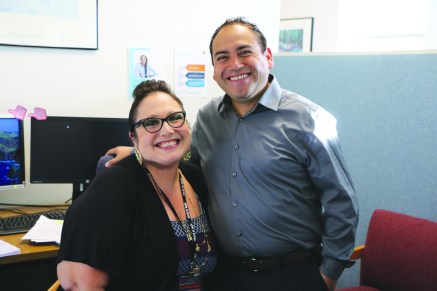
Carlos Ramos, pyschosocial rehabilitation specialist, and Christine Poff, client services technician, pause for a photo before starting their work day in Family and Community Services. See page 3 to read about a day in the life of Carlos.
Carlos Ramos, pyschosocial rehabilitation specialist, and Christine Poff, client services technician, pause for a photo before starting their work day in Family and Community Services.

Carlos has worked for the state for more than 11 years. When we meet him, it has been two weeks since his promotion to the newly developed role of psychosocial rehabilitation specialist, although he prefers to refer to his role as “family engagement specialist.” Prior to this, he was a client services technician for several years. His work involved providing support for supervised visits between children who are in foster care and their families. In his new role, he focuses more on proactive training and relationship building between clients and department staff. Ultimately, his work is always focused on providing support and resources that will lead toward the path of safe reunification for the family.

Carlos glows with natural charm as he introduces us to his colleagues in the office. He poses for a picture with one colleague, Christine Poff, teasing her (or himself): “You should sit down for this photo. You’re too tall!” he says. To another colleague, he checks that they are still planning on having tamales for lunch sometime this week. He checks the staff notes board to see if his former supervisor, Sharon Campbell, is in. He describes her as “magic” and talks about her glowingly and at length throughout our visit. A colleague appears from a visitation room cradling a baby, and Carlos strides over, unable to help himself from joining in. As he leans down toward the baby, his normal smile broadens and beams over his entire face. “You’re one of those cute babies!” he coos. Continue reading “A day in the life of Carlos Ramos, psychosocial rehabilitation specialist at DHW”

Medicaid enrollment for expansion continues


20191106Medicaid_Expansion_FBCover

The Idaho Department of Health and Welfare is enrolling eligible Idaho adults in Medicaid who earn up to 138 percent of the Federal Poverty Limit. Benefits for those folks will begin on Jan. 1, 2020.

So if someone applies in December and is determined to be eligible, will they be able to access their benefits on Jan. 1?

Medicaid expansion will be effective January 1. However, depending on when the application and all verifications were submitted, they may not have a final decision about eligibility on January 1. Medicaid operates under what is called month-effective eligibility. That means if a person applies and is eligible on Jan. 6, they will be eligible for all of January.

Open enrollment for buying insurance on Your Health Idaho ends on Dec. 16. Does that same deadline apply to Medicaid?

There really is no deadline to apply for Medicaid. People who think they may be eligible can apply at any time. If you’re not sure, you should start that process now, so if you’re not eligible for Medicaid but you are eligible for a tax credit, there is still time to purchase insurance on the state-based health insurance exchange. Continue reading “Medicaid enrollment for expansion continues”

Wash your hands, because it’s gross if you don’t! (And it might make you sick)

Given the news we recently heard that something like a quarter of all cooks don’t wash their hands, and the fact that we’re in the middle of flu season, it’s time for our annual plea and reminder about how important it is to frequently wash your hands. It’s truly one of the best things you can do (besides getting immunized) to avoid getting sick or spreading germs to others.

Let’s start with the basics. When should you wash your hands?

You should wash them after using the bathroom and when you are preparing food or are getting ready to eat. You should also wash up before and after caring for someone who is sick, after changing a diaper, after touching an animal, and after blowing your nose or coughing or sneezing into your hands.

Is there a right way to wash your hands?

Wash your hands
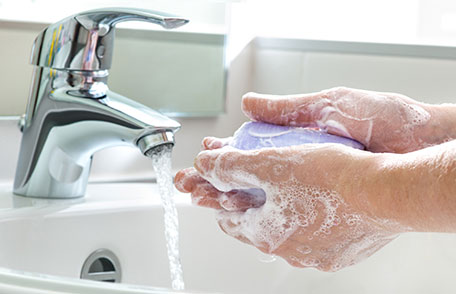
Wash your hands often with soap and water, but especially after going to the bathroom and before you eat.

This might seem like overkill, but to effectively kill germs and get clean, there are five steps to washing your hands: Wet, Lather, Scrub, Rinse, and Dry. You should use soap and water and vigorously rub your hands together for at least 20 seconds, which also is the length of the “Happy Birthday” song from beginning to end, twice. Hum it while you scrub the backs of your hands, between your fingers and under your nails each time you wash to make sure you get rid the germs. Continue reading “Wash your hands, because it’s gross if you don’t! (And it might make you sick)”

A Day in the Life of Wendy Walther Davis: The ‘Why’ of the Work

Like many department employees, Wendy Walther Davis, medical program specialist, sits in an unassuming office in the belly of an office building where the public does not tread. Also like so many employees, Wendy quietly goes about doing an enormously valuable job. She arranges medical transportation for Medicaid participants with urgent needs.

When we think of medical transportation, the conjured image is a van or ambulance picking someone up, dropping them off, and it’s done. But in Wendy’s world, figuring out how to transport someone is far more complicated, and sometimes life and death. “I don’t just work with transport companies,” she says. “I work with doctors, long-term care providers, government entities, participants, and the participants’ families. I genuinely care about these people. In fact, many of them feel like friends.”

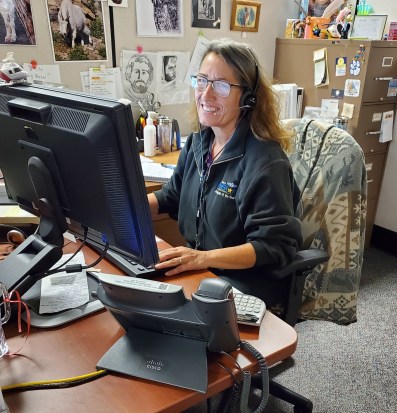
Wendy Walther Davis is a medical program specialist in the Division of Medicaid.

Much of Wendy’s job entails working around obstacles to ensure patients get what they need within the timeframe they need it. On the day we caught up with her she was working to get a terminal patient out of state back to Idaho so they could spend their last days with their family. To accomplish this, she worked with the family to ensure hospice was in place when the patient arrived, worked with the out-of-state provider’s transportation team to make sure they were aware of the patient’s situation and ready in case he passed away during the trip. Although this is not a situation that would normally be attempt by Wendy and her team of providers, they were determined to try because it is “the right thing to do. No one should have to die in a hospital hundreds of miles from their family.” she says. Continue reading “A Day in the Life of Wendy Walther Davis: The ‘Why’ of the Work”