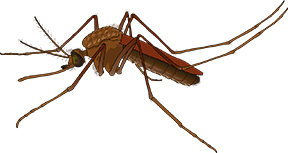
Mosquito season has begun! Tips to avoid mosquito bites (and reduce risk of West Nile)


mosquitoMosquito abatement districts are surveying and treating for the pesky little blood-suckers earlier than usual because spring has been so mild. So now is a good time to go over the precautions you should take to protect yourself and your family from mosquito bites. Zika virus has been in the news a lot lately, but in Idaho and the rest of the United States, we worry the most about mosquitoes transmitting West Nile virus. This early in the season, we’ve had no reports of West Nile in mosquitoes, humans or horses. Last season in Idaho, 13 people and four horses were infected in six counties. Fortunately, there were no deaths.

Who needs to be thinking about how to avoid West Nile virus?

Everyone who plans to be outside this summer and fall should be thinking about how to avoid mosquito bites. The virus is transmitted by the bite of an infected mosquito. We tend to see the most human illnesses from the virus in July and August, but that could change this year since the weather warmed up so quickly. Continue reading “Mosquito season has begun! Tips to avoid mosquito bites (and reduce risk of West Nile)”

Change is coming in less than 2 months for food stamps recipients in Idaho

Starting July 1, food stamps benefits will be delivered on a different schedule. They will be delivered over the first 10 days of the month, instead of only on the first of the month. It’s very important that everyone involved understands how they may be affected so they can plan ahead and avoid a food shortage as much as possible. Participants who do not receive their benefits on the first of the month will need to have a plan for how they will address the extra days until their benefits are available.

Why is the schedule being changed?

The Legislature passed a law in 2014 to require the department to issue benefits over the first 10 days of the month rather than only on the first day of the month. Grocers had lobbied the Legislature to move to a 10-day distribution for benefits because of crowded stores, long lines and challenges with inventory on the first of each month. The department has been working with grocery stores, food banks and pantries, and others since July 2015 to make this transition as seamless as possible. Continue reading “Change is coming in less than 2 months for food stamps recipients in Idaho”

LiveBetterIdaho.org is a new and unique way for consumers to discover and connect to supports that can help them live healthier lives.

LiveBetterIdaho.org offers a ‘holistic web approach’ for Idahoans

Live better, Idaho.

A new website focused on empowering Idahoans to do just that is now available.

LiveBetterIdaho.org is a new and unique way for consumers to discover and connect to supports that can help them live healthier lives. By linking them to appropriate services, they can be empowered to make better choices and – we hope — move themselves and their families to independent, healthier lives.

“It is a very ambitious goal and helps the public quickly take action to access local, state and national resources available to help Idahoans,” said Dick Armstrong, director of the Idaho Department of Health and Welfare (DHW). “LiveBetterIdaho.org is more of a holistic web approach for people who want to improve their lives. It can help them put food on their tables, enroll in a nutrition education class, find jobs and mentors, make child support payments, quit smoking, and get access to healthcare, among other things.”

LiveBetterIdaho.org is a new and unique way for consumers to discover and connect to supports that can help them live healthier lives.

The site was created by the Idaho Department of Health and Welfare to fulfill an initiative in its strategic plan, but the department is only the facilitator for a strategy of connecting people in need to a larger framework that includes community partnerships and services in addition to public assistance programs. Continue reading “LiveBetterIdaho.org offers a ‘holistic web approach’ for Idahoans”

Mental health is fundamental to our overall health

Millions of Americans face the reality of living with a mental health condition. That means you probably know someone or are yourself living with a mental health condition. Since May is Mental Health Awareness Month, it’s a great time to talk about it and help put an end to the stigma about mental health issues.

How many people really are dealing with a mental illness?

Generally, 1 in 5 adults and children have a diagnosable mental illness. That makes mental illness more common than cancer, diabetes or even heart disease, and yet we hear much more about those diseases than we do about mental health conditions. That’s why this month is so important. About half of the adults in the United States will develop a mental illness at some point in their lives. It is normal in our society for people to have or develop a mental illness. It’s also normal to live a life of recovery. Continue reading “Mental health is fundamental to our overall health”

April is STD Awareness Month. Do you know your status?

Talk. Test. Treat. Those are three simple things you can do to protect your health. Most people don’t really want to talk about sexually transmitted diseases, but the truth is that a hidden epidemic of STDs is happening in this country now. The Centers for Disease Control and Prevention estimates that 20 million new infections happen each year, and that there are now more than 110 million sexually transmitted infections in men and women in the United States.

What are some of the most common STDs in Idaho?

Chlamydia, gonorrhea, and syphilis have been on the rise in Idaho for the past several years. Idaho’s local health departments reported sharp increases in gonorrhea and syphilis cases in 2014-2015, and a high number of cases continue to be reported this year. The good news is that most sexually transmitted diseases are preventable, treatable, and even curable when they’re caught early. But you must be tested and diagnosed. If you are sexually active and haven’t been tested, now would be a good time to make an appointment with your doctor or visit a clinic to discuss your options. Continue reading “April is STD Awareness Month. Do you know your status?”

Are your children current on their immunizations?

ImmunizeGirl

(Note: A Closer Look At Your Health airs at 6:50 a.m. most Tuesdays on KBOI News Radio 670. This is an edited transcript of the segment from April 19.)

This week is a good time to ponder that question because it’s National Infant Immunization Week, and World Immunization Week is next week. It’s a good time to talk about making sure you and your family are fully protected against infectious diseases.

This week, the focus is on infants. Why infants specifically instead of all children?

While it’s important that all children have received the recommended vaccinations, giving babies the recommended immunizations by the time they are 2 is the best way to protect them from 14 serious childhood diseases, including whooping cough and measles. Parents are encouraged to talk to their child’s doctor to make sure their babies’ immunizations are up-to-date. Continue reading “Are your children current on their immunizations?”

Please help Idaho’s children by reporting suspected child abuse or neglect

Keeping children safe is one of our primary goals at the Department of Health and Welfare. This month is National Child Abuse Prevention Month, so it’s a good time talk about what you should do if you think a child might be neglected or abused.

If you suspect a child is abused or neglected, what should you do?

We hope you’ll care enough to call 1-855-552-KIDS. If you even suspect that a child is being mistreated, you are required by law to call and report it. Your call is confidential, and you don’t have to prove neglect or abuse. That’s the job of law enforcement and social workers. You just need to let us know you think there might be an issue, so our child protection staff can start looking into it.  Continue reading “Please help Idaho’s children by reporting suspected child abuse or neglect”

A Closer Look At Your Health: Preventing norovirus

(Note: A Closer Look At Your Health airs at 6:50 a.m. most Tuesdays on KBOI News Radio 670. This is an edited transcript of the segment that aired April 5.)

This nasty little virus tends to be thought of as a cruise ship illness because outbreaks on ships sound like a terrible vacation — and that’s when the media tends to cover it the most. But for most of us, there’s a better chance of becoming infected in restaurants, long-term care facilities like nursing homes and in other places where people gather and share bathrooms, including day cares, schools, camps, and big events. It’s so highly contagious – a very small amount of the virus can make you sick. It’s estimated that a person will get norovirus five times in their life.

What does norovirus do to us?

It’s not pleasant. Norovirus causes gastroenteritis, which is an inflammation of the stomach and intestines. That leads to stomach cramping, nausea, vomiting, and diarrhea. The virus is found in the vomit and stool of infected people. Other symptoms include stomach pain, fever, headache and body aches.  Continue reading “A Closer Look At Your Health: Preventing norovirus”

DHW committed to helping people live independently

The federal district court recently ruled on a lawsuit involving people with developmental disabilities who receive Medicaid funding to pay for their day-to-day living support. Medicaid’s goal is to provide people with disabilities the supports they need to live as safely and independently as possible in their community, rather than an institution.

Medicaid will pay for up to 15 services directly related to a participant’s developmental disability as well as any services for additional medical needs they may have. Developmental disability services can include such things as 24 hour care so that participants can live in their own home, therapy to help participants develop skills they need to live in the community, non-medical transportation so that they can access and integrate into the community, and other supports that ensure that their homes meet their functional needs. Continue reading “DHW committed to helping people live independently”

It’s not too late to get the flu. Seriously.

Don’t let the warmer temperatures fool you – flu is still circulating widely in Idaho. The number of flu-related deaths has seen a bump in the past several weeks, and public health officials are advising Idahoans to take precautions to avoid getting sick.

“It’s a very late season compared to previous seasons,” said DHW’s State Epidemiologist Dr. Christine Hahn. “People are still at risk for serious complications related to the flu. This season’s vaccine is a good match for the circulating strains. If you haven’t gotten it yet, it would be a good idea to do so.”

So far this season, the state has had reports of 16 flu-related deaths, many of which didn’t happen until the last couple of months. The number of deaths typically lags behind the season, so it’s possible there will be more. The state reported 32 flu-related deaths during the 2014-2015 flu season.  Continue reading “It’s not too late to get the flu. Seriously.”