
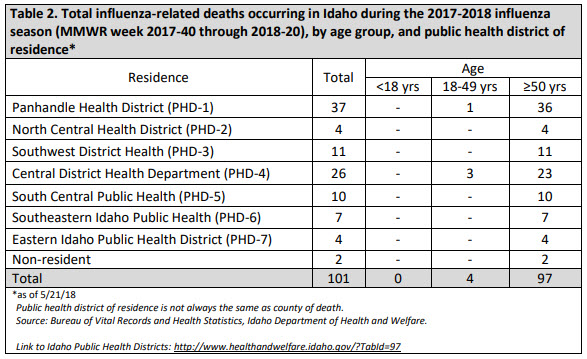
Idaho’s flu season typically lasts from October through May, and the Department of Health and Welfare has received reports of 57 flu-related deaths this season. That makes it the third most severe flu season in a decade. Idaho typically sees an average of 22 flu-related deaths each season. Now that this season is winding down, I encourage all Idahoans to plan now to get an annual flu vaccine in the fall. We would love to see an increase in the percentage of Americans who get the flu vaccine each year because that means fewer people will require hospitalization from flu complications.
How does the seasonal flu vaccine, which is not 100 percent effective, help us avoid getting the flu?
The flu vaccine works! It reduces your risk of getting the flu, and even more critically, it reduces your risk of landing in the hospital with complications from the flu. This is especially important for people at high risk of getting very sick — for example, children with asthma, adults with heart disease, and elderly people. Just over 200,000 people in the United States are hospitalized for flu-related complications every season, on average.
Do you have to get it every year?
Yes, because immunity decreases over time, and because the viruses in your community are always changing. Flu infects anywhere from 5-20 percent of the population every year. Continue reading “An update on Idaho’s flu season”
 We at the Department of Health and Welfare have started tracking flu season, and you know what that means — it’s time to get the annual flu vaccine. We have had some indications that the season may hit us earlier this year than in recent years, so don’t delay. Flu season can last from October to May, and it typically peaks anytime between December and March. Getting vaccinated now is the best way to protect yourself and your loved ones from what can be a serious infection, even for otherwise healthy people.
  DHW Voice